Across social media, one type of puzzle continues to capture people’s attention: hidden-image IQ tests. Among the most famous is the challenge that asks a simple question: “Can you see the horse?” At first glance, the image may appear confusing, filled with random shapes, shadows, or overlapping lines. Some people notice the hidden horse immediately, while others stare at the image for several minutes before finally spotting it. This difference often leads viewers to wonder whether the puzzle is truly connected to intelligence.
The popularity of these visual challenges comes from the way the human brain processes information. Our brains are constantly searching for patterns and familiar objects in the world around us. When we look at clouds and imagine animals or faces, we are using the same mental process involved in solving hidden-image illusions. In the horse illusion, the brain tries to organize scattered visual details into a recognizable shape. Once the horse becomes visible, it is almost impossible to “unsee” it because the brain has already completed the pattern.
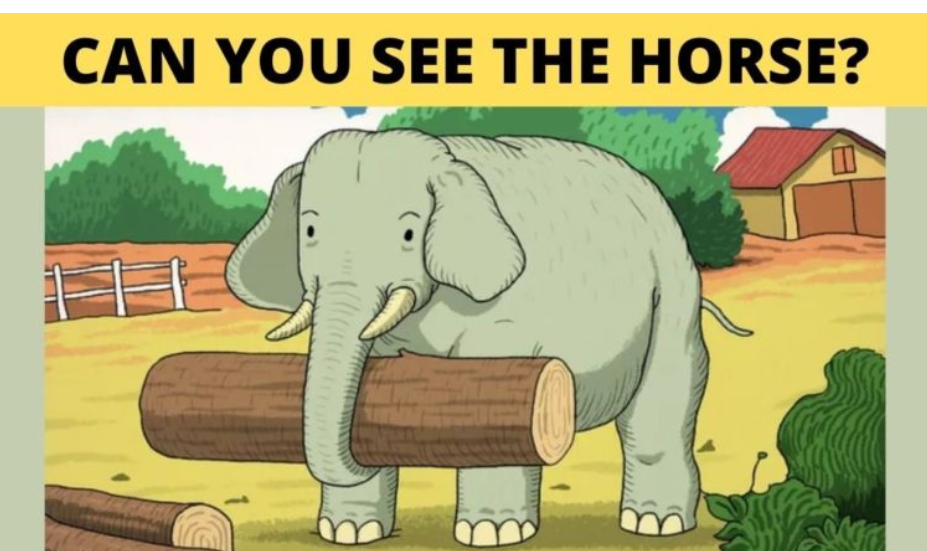
Many online posts claim that finding the horse quickly means a person has a high IQ. While there is a small connection between visual perception and intelligence, these puzzles are not official IQ tests. Real intelligence tests are carefully designed by psychologists to measure several cognitive abilities, including logical reasoning, memory, language comprehension, problem-solving, and processing speed. A single image illusion cannot accurately determine someone’s intelligence level.
However, hidden-image puzzles can still reveal interesting aspects of how people think and observe details. Some individuals naturally focus on shapes and patterns, making them quicker at spotting hidden objects. Others may pay more attention to colors, textures, or separate details rather than the overall image. This does not mean one person is smarter than another — it simply shows that human perception works differently from person to person.
Psychologists and neuroscientists often study optical illusions because they help explain how the brain interprets information. The eyes do not simply “see” reality like a camera. Instead, the brain actively builds an interpretation of what is being viewed. It uses past experiences, memory, and expectations to fill in missing details. That is why two people can look at the same image and notice completely different things.
Another reason these horse illusions spread quickly online is the emotional reaction they create. People enjoy testing themselves and comparing results with friends. When someone spots the hidden horse quickly, they may feel proud or excited. If another person struggles to see it, curiosity increases, encouraging them to keep looking. Social media platforms thrive on this type of engagement because it encourages comments, shares, and discussions.
Interestingly, practice can improve performance on visual puzzles. People who regularly solve optical illusions or brain teasers often become better at recognizing hidden patterns. Their brains learn to search for outlines, contrast changes, and unusual shapes more efficiently. This means success on these puzzles is influenced not only by natural ability but also by experience and attention.
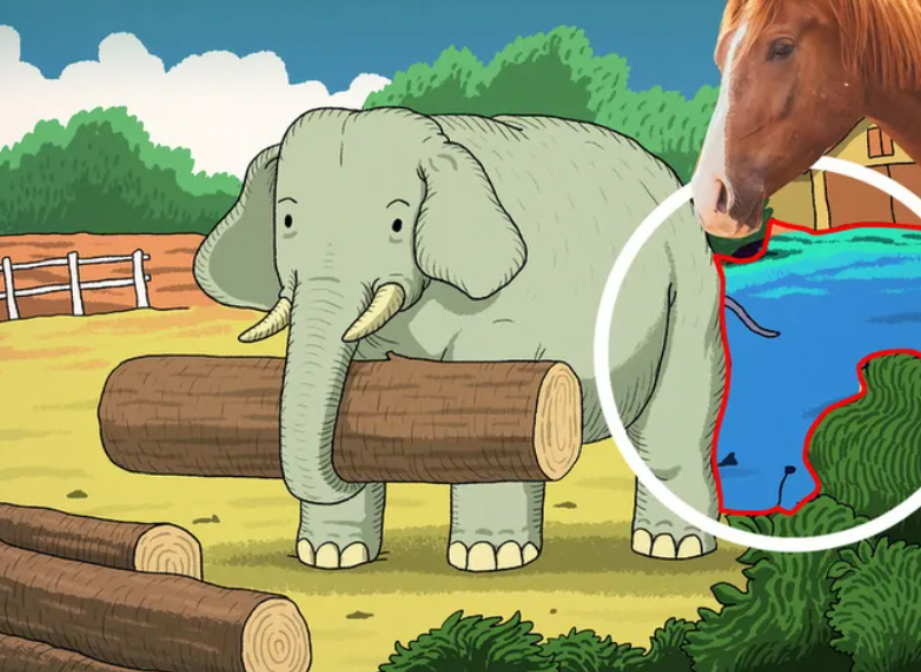
Although these viral “IQ tests” are entertaining, they should not be taken too seriously. Intelligence is far more complex than the ability to spot a hidden horse in an image. Creativity, emotional understanding, communication skills, and critical thinking are all important parts of human intelligence that cannot be measured through a simple visual challenge.
In the end, the hidden horse illusion is best viewed as a fun exercise for the brain rather than a scientific measure of IQ. Whether you find the horse instantly or need extra time, the puzzle demonstrates something fascinating about the human mind: our brains constantly work to make sense of the world, turning confusing patterns into meaningful images. That is what makes these illusions so enjoyable — and so mysterious — for millions of people online.